Thursday, 20 December 2012

Merry Christmas

Calm Seas at Dusk in the Pacific Ocean
     I'd like to thank you all for 'cruising' along with me this year and wish you

                       a very Merry Christmas

                           
            and may 2013 bring you more cruises and calm seas all the way!

Wednesday, 12 December 2012

Port Vila, Vanuatu, Port of Call Information

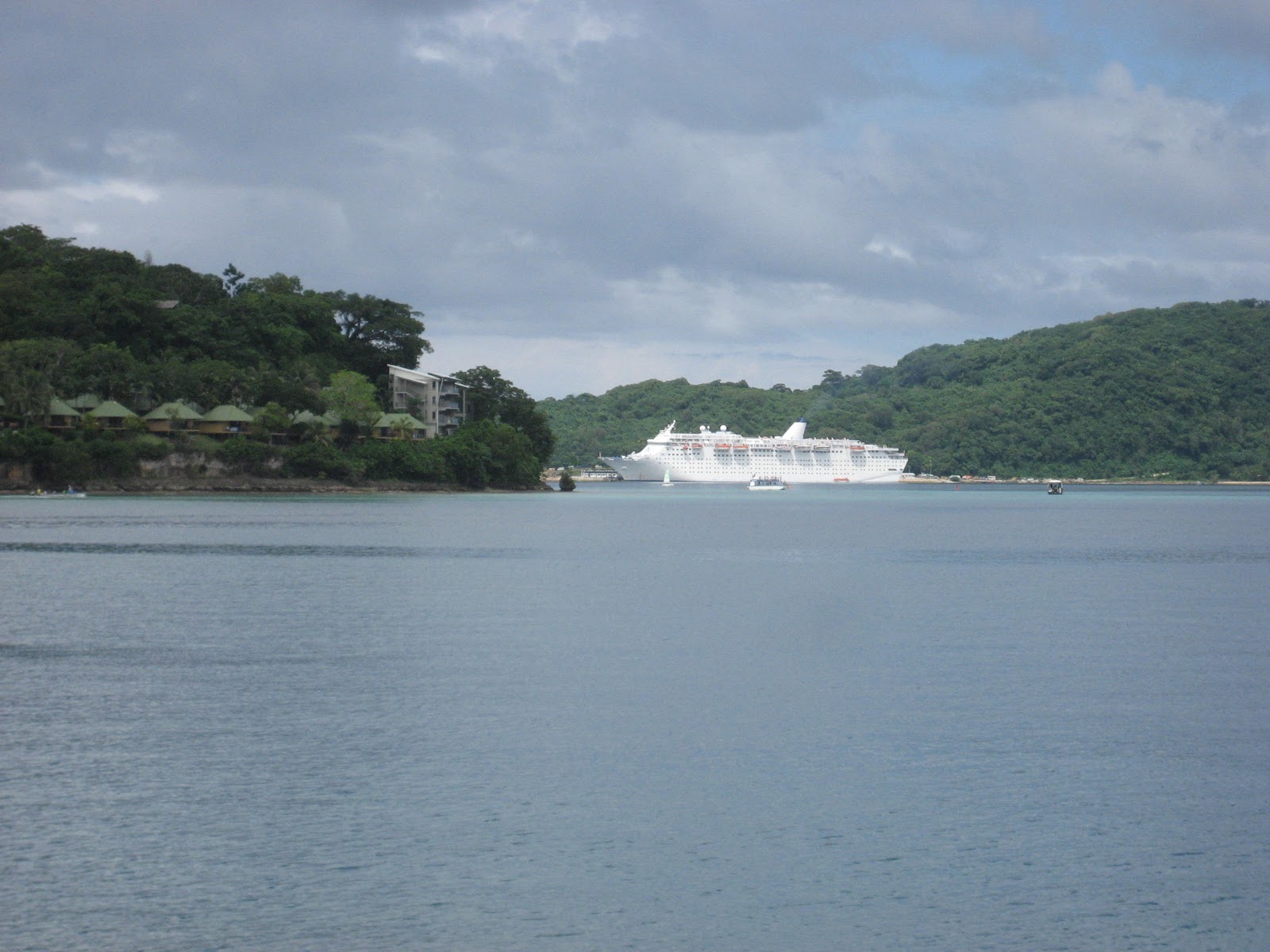
The view from a cruise ship in dock at Port Vila
Port Vila, on the island of Efate, is the capital of Vanuatu. Several cruise lines visit here on their South Pacific island itineraries. You're sure to be given a warm welcome when you arrive - the people of Vanuatu are reputed to be among the friendliest in the world!
   Your cruise ship will dock at the commercial wharf which is about 3 km from Port Vila township. Lines of taxis and minibuses wait near the pier gates as the ship arrives. A band of musicians are on hand to sing to you as you leave the port.
   By the dock is a large market with a lot of stalls lined up on both sides of the flat land beside the sea. Local people sell handicrafts, sarongs, jewellery, brightly coloured shirts and blouses, and children's toys.
   To go into Port Vila township, you can get a taxi which will be a set price for the vehicle no matter how many people travel in it, or a minibus which is cheaper but will only leave when all seats are full. The trip into town along the Lini Highway takes 10 to 15 minutes. Drivers accept Australian dollars for the fares.
   If you decide to walk, make sure you have sunscreen and water with you. It is so hot and humid that I don't advise it. It's so much easier and more pleasant to have a ride.
   
Looking back from Port Vila town to the cruise ship dock

To get back to the ship after your outing in Port Vila, either hail a taxi on the street or go to the little square by the Post Office where the minibuses park. The minibuses have to be full before they will leave town but there is seating under shady trees while you wait.

Monday, 10 December 2012

Lifou Cruise Port of Call Information

Arriving at Lifou by Cruise Ship
Doesn't this scene look idyllic? A cruise ship, calm blue seas, sunny skies, a coconut palm on a Pacific island! You have arrived at Lifou!
  Situated between New Caledonia and Vanuatu in the area of the Pacific known as Melanesia, the island of Lifou is a raised coral platform. It is densely covered in tropical bush and has some interesting limestone caves, white sand beaches and opportunities for snorkelling and diving amongst the coral reefs.
  Both P&O Cruises and Holland America visit Lifou as part of their Pacific cruise itineraries. Tourism is becoming increasingly important to the island's economy.
   Your cruise ship will anchor just offshore in the Baie du Santal. This large bay is almost enclosed so the water is usually calm. You'll go ashore by tender, a short trip of only a few minutes. The tenders will pull alongside a long wharf. From there you'll walk up a slight slope to a large, thatched roof hut where souvenirs, postcards, colourful sarongs and beach bags are sold.
   The car park behind this hut is where the shore tours leave from.
   
Ashore on Lifou Island
One little novelty that sets Lifou apart from other islands on a cruise itinerary is that here you can get your passport stamped. If you'd like to get that done, take your passport ashore with you and the lady at the table in the hut where the postcards are sold will happily decorate the document with a Lifou stamp. It costs a couple of Australian dollars.

Thursday, 6 December 2012

Going Ashore on a Pacific Island

In the Village on Dravuni Island, Fiji
Sunhat. Check. Swimsuit. Check. Sunscreen. Check. Beach towel. Check. Water bottle. Check.
Now, what else will you need on a shore day when you're on a South Pacific cruise?
  Shore tours are often action-based, such as being out on the water, visiting waterfalls for a swim or walking through the tropical rainforest where the tracks are sometimes wet and muddy. Closed-in sports shoes are better than open-toed sandals or jandals (flip-flops).
   When at the beach, it's a good idea to wear reef shoes, those soft-soled rubber slip-ons, to protect your feet from scratches from the sharp coral that is underfoot in places.
   Take a cover-up top and perhaps a sarong to the beach as well. 
Kanak People on Lifou Welcome Cruise Ship Passengers
  Many of the South Pacific communities are deeply religious and the local people dress modestly. This photo shows women on Lifou in New Caledonia wearing dresses that are styled on the ones missionaries, shocked by the locals' nudity, introduced to the islands in the 19th century.
  It is a sign of respect for a different culture if you dress respectfully when ashore. Keep your swimsuit and scanty clothing for the beach. Cover up when walking in areas away from the beaches and especially when visiting an island village.
  Local customs may also mean that you don't wear hats in the villages and women are asked to wear knee-length or long dresses. This is where a sarong comes in handy!
   If you're lucky enough to be invited into a home, take off your shoes and leave them outside at the door.
   And always remember to accessorise with a smile!

Tuesday, 4 December 2012

Clothes for a Pacific Island Cruise

Lightweight Summer Clothes for a South Pacific Cruise

Just because all the travel brochures show the Pacific Islands as being bathed in bright sunshine and surrounded by turquoise calm waters doesn't mean the weather is always like that. In fact there are two distinct seasons in the South Pacific that you need to be aware of when you are packing for your cruise.
  The dry season is during the winter, between May and November. This is when the weather is the most comfortable, with daytime temperatures around 25°C. In most areas the winds are generally light.
  Pack lightweight summer clothes that are easy to wash and fast to dry. Also put in a pashmina or light jacket for when you stroll around the decks at night or sit outside on a lounger, stargazing to pick out the Southern Cross constellation.
  The wet season is during the Southern Hemisphere summer, between November and April. Then you can expect high humidity which makes the temperatures of 27 to 32°C seem even hotter than they are. The wet season is aptly named for the fierce tropical downpours that last about half an hour or so before the sun shines again.
  This time of year is also the cyclone season so you may find you are cruising through high winds and choppy seas. 
  It's a good idea to pack a fold-up, light umbrella or a clear plastic rain poncho (the type that comes in its own little pouch) in case you get caught in the rain when you're ashore.
  You might find it more comfortable in the high humidity to wear clothes made of natural fabrics rather than synthetic materials. 
   And what ever the season, you will need a sun hat and a swimsuit to make the most of the South Pacific and those exotic tropical island destinations!

Wednesday, 28 November 2012

Souvenirs From a South Pacific Cruise

Beach Bags for sale at Port Vila markets, Vanuatu
I think part of the fun of travelling is picking up souvenirs of things you might not get in your own country. An island-style memento to take home as a reminder of your Pacific Island cruise will bring back fond memories of sunshine and sandy beaches when you are in the middle of a cold and frosty winter!
  The laid-back lifestyles of the tropics are reflected in the souvenirs on offer to tourists. When cruise ships visit some of the Pacific Island ports, the local people sell their wares from little stalls set up beside the roads or on the beaches. It is a great chance to chat and laugh with the islanders as you look at what they have for sale.


Souvenirs at a roadside stall in Savusavu, Fiji
Here are some of the things you might choose to buy on your South Pacific cruise.
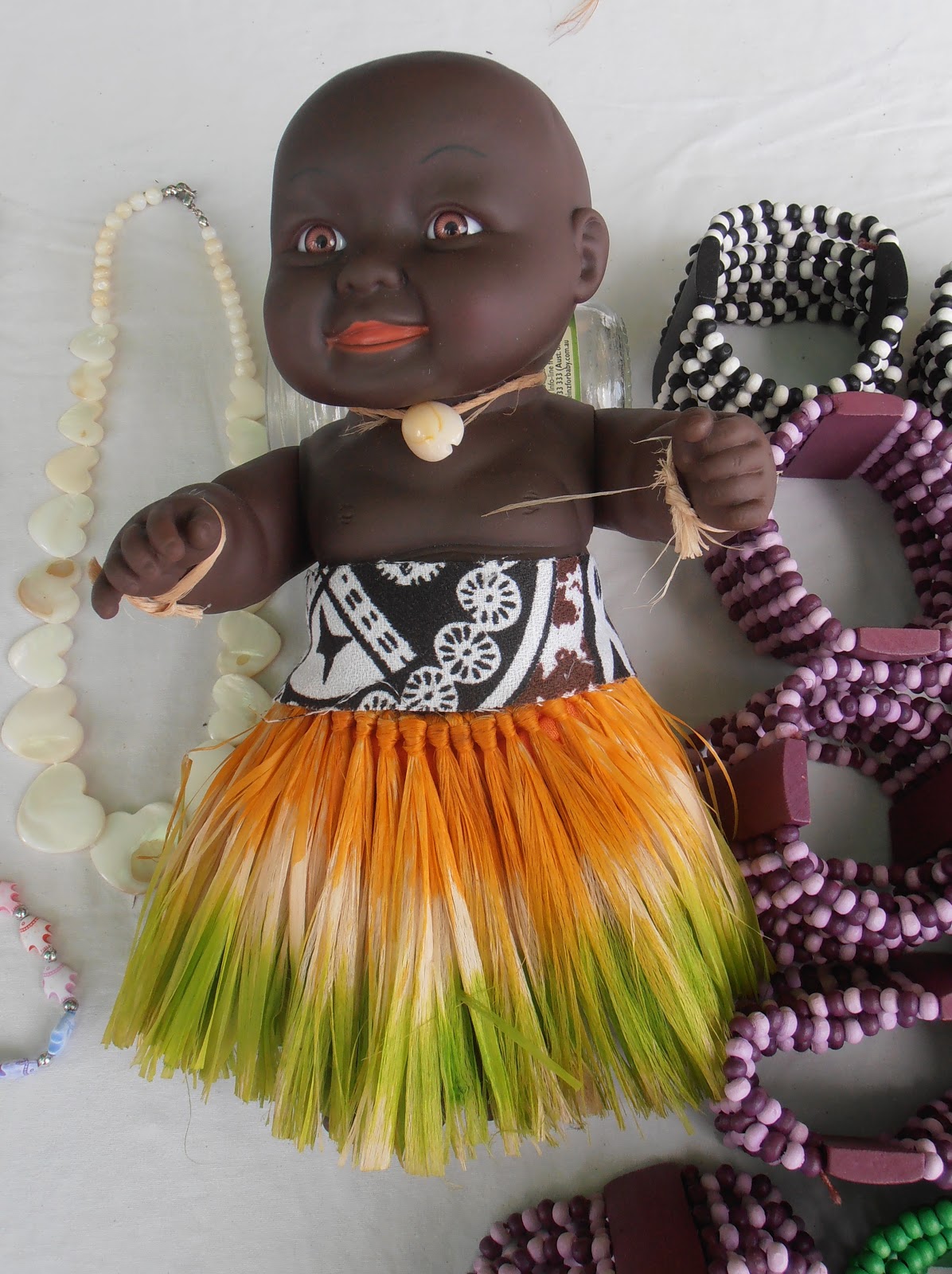
The doll wears a tapa cloth top

  • Pacific Island clothing: casual clothes are the order of the day. Brightly coloured fabric, often patterned with hibiscus flowers, is used to make shirts, skirts and sarongs as well as beach bags.
  • Jewellery: delicate mother of pearl and other shells, such as the colourful conch and cowrie, are made into bracelets, necklaces, pendants and earrings. In Fiji, I bought an unusual pendant made of strips of shells. In Savusavu, Fiji, and in Tahiti, black pearls which are locally farmed are used to make striking jewellery. 
  • Wood carvings: artisans use locally sourced wood to create a range of wood carvings as souvenirs. Sometimes you'll be able to watch the woodcarvers at work. Their pieces range from tiny to life size, and include paddles, spears, decorated masks and carved turtles. I suppose what you choose will depend on how much space you have in your suitcase!
  • Souvenirs made from leaves: in villages all around the Pacific, pandanus leaves are woven to make a wide range of useful items such as floor mats for houses, and baskets to store and carry provisions. You might like to buy placemats and coasters for the dining table, baskets and bags or even a sun hat made from pandanus leaves.
  • Tapa cloth: something that is unique to the South Pacific is tapa cloth. The inner bark of the paper mulberry tree is harvested, soaked in water and pounded to compress the fibres. This results in a strong, thin, paper-like substance used to make floor mats, placemats, even clothing. The patterns in brown and black on the cream coloured tapa cloth are made from natural dyes. I bought a set of four round placemats in Fiji that are perfect for when we have barbecues.
A word of warning. If your cruise ends in Australia or New Zealand be aware that those countries have very strict bio security laws about importing items made of wood and other plant materials. You must declare them on your customs arrival cards otherwise you'll risk getting an instant fine and the goods will be confiscated.

Saturday, 24 November 2012

A Day in Noumea, Port of Call

Looking Down Over Noumea
So you are in Noumea on a cruise ship and wondering what to do for the day. If you want to explore independently there are several options. 

  • You could go on a one hour bus trip (get your ticket from a local operator at the cruise terminal) that is a good way of getting to the best vantage points up in the hills for spectacular wide views. From the lookout of Ouen Toro, the 360° view over the lagoon and islands and out to the Barrier Reef is stunning.
  • Ride on the bright yellow Le Petit Train. This train leaves from the dock and trundles on a sightseeing tour of the city that takes about one and a half hours.
  • Hire a pushbike from outside the cruise terminal and ride along the flat coastal road to one of the safe sandy beaches (Baie des Citrons and Anse Vata) for a few hours swimming and sunbathing. If riding a bike is not your thing, a shuttle bus runs to the beaches from the cruise ship terminal at regular intervals.
  • Visit the aquarium at Anse Vata Beach. All sorts of weird and wonderful examples of tropical marine life, including glow-in-the-dark corals, from the seas around New Caledonia are on display.
Reef Fish at the Noumea Aquarium

  • Catch a local bus out to the Tjibaou Cultural Centre for an understanding of the indigenous Kanak people. The visitor experience starts with an easy 45 minute guided walk, learning about stories of Kanak folklore. Three traditional huts from three regions of Melanesia can be visited, along with displays of masks, sculptures and ritual costumes.
  • Swim and Sunbathe at Sandy Beaches in Noumea
  • And if all the swimming, sightseeing and sunbathing is not enough, you can always go shopping in the stores in the central city, near the cruise terminal, that are stocked with beautiful goods imported from France.
Enjoy your day ashore in Noumea!